

BASE ROBOTICS
BASE ROBOTICS
We are not building another niche robot.
We are building the universal infrastructure for ground autonomy.
The mission
The world doesn’t need another single-purpose robot.
It needs an ecosystem.
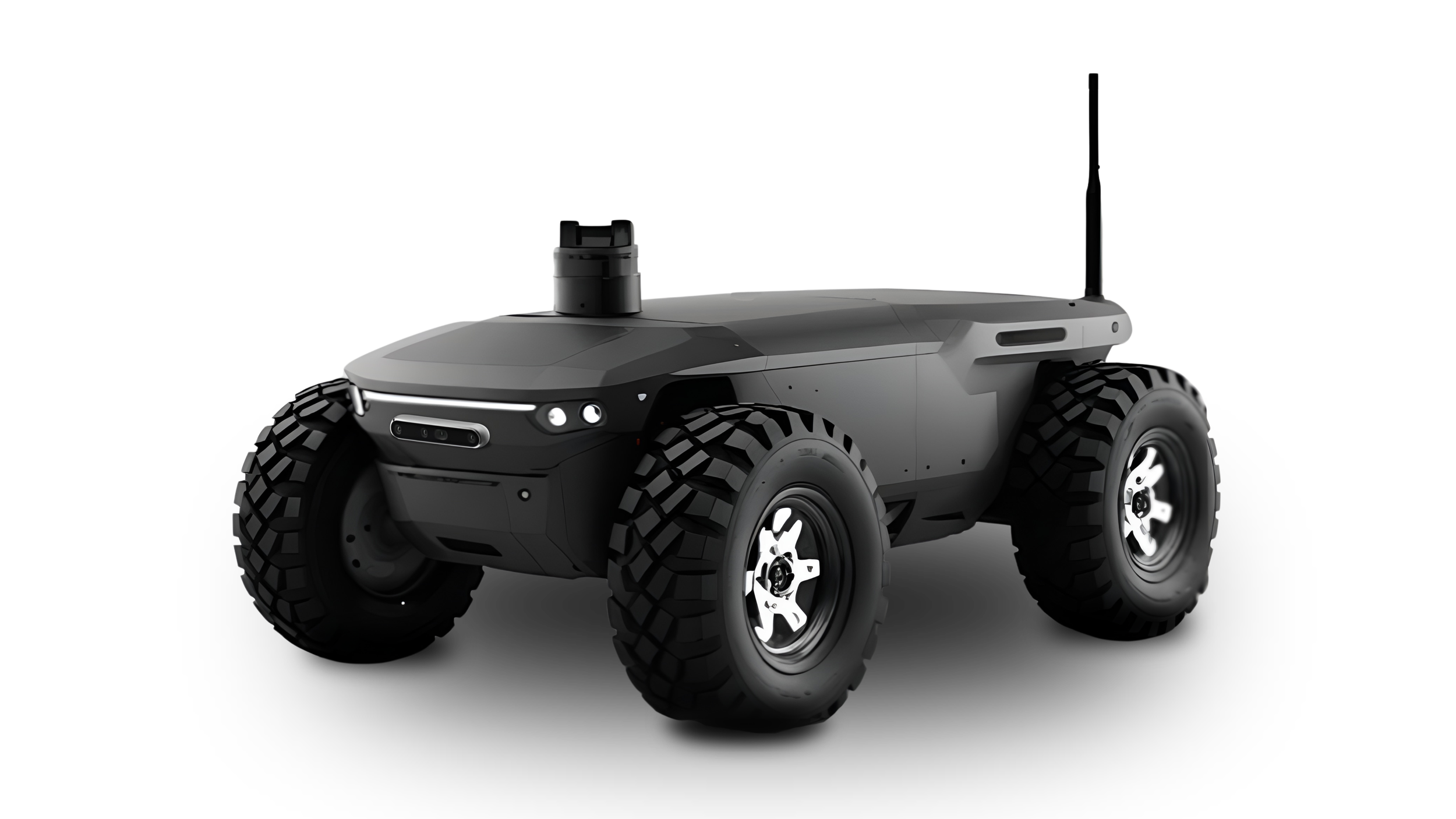
Base Robotics is building the foundational layer for physical AI: an intelligent, modular robot that can autonomously reconfigure itself to handle any outdoor task.
From solar farms to agriculture, renewable energy farms, industrial yards, remote outposts, etc. Base is the connective tissue between autonomy, adaptability, and infrastructure.
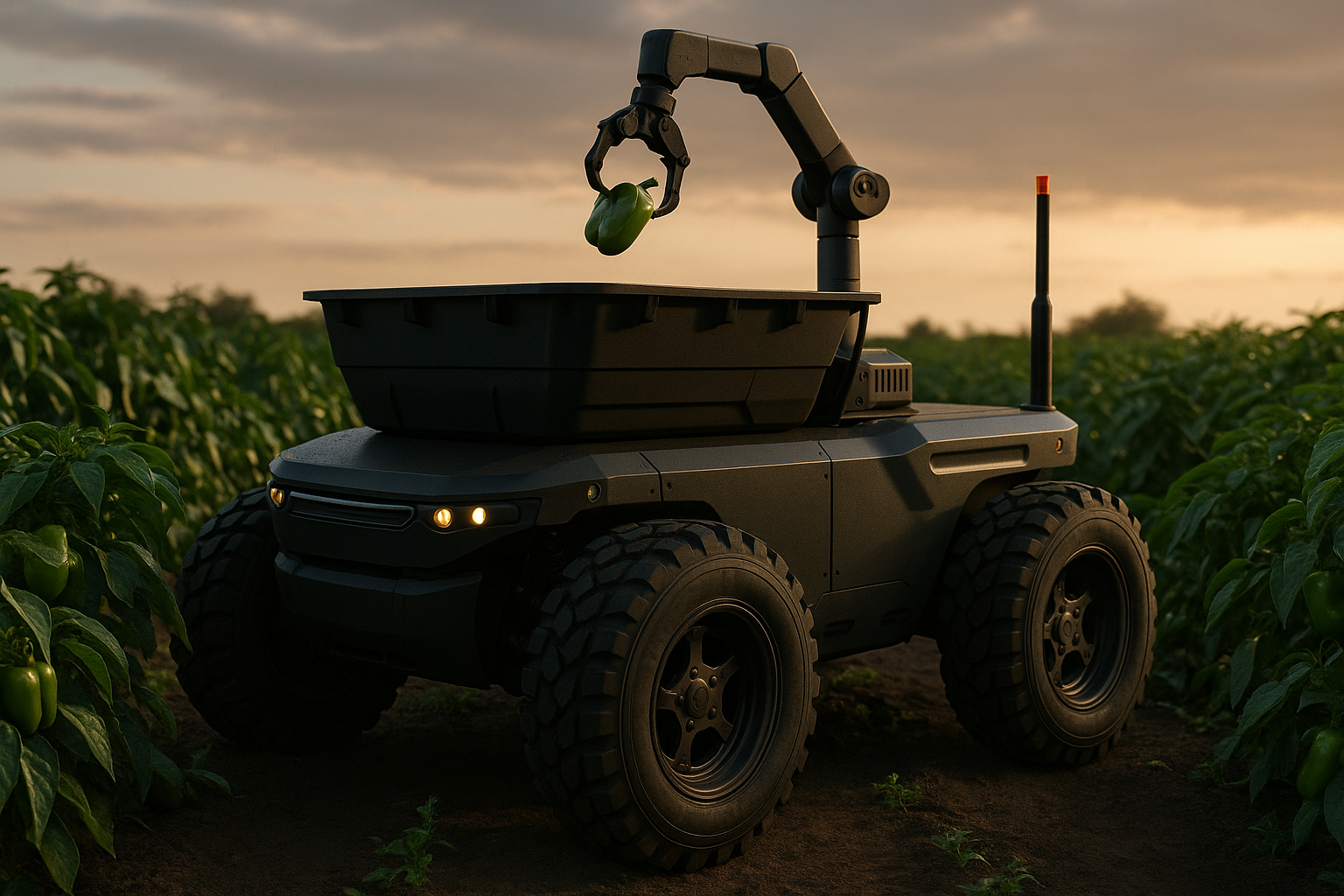
THE platform
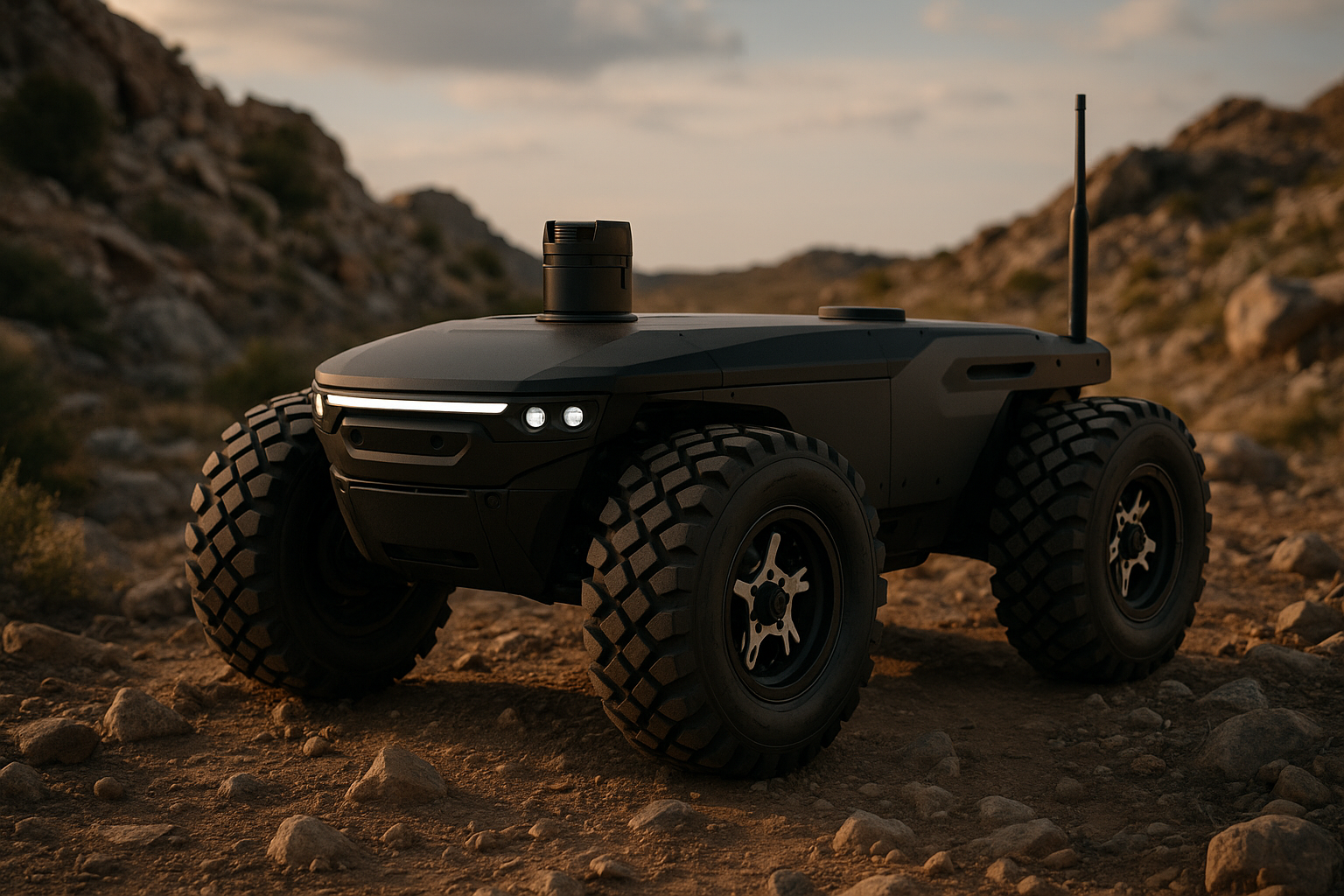
A rugged, all-terrain, electric ground robot designed to handle the harshest field environments.
Dimensions: 30” × 48” × 30”
Payload: 175 lbs
Ground Clearance: 8–11”
Power: Dual 48V 30Ah LiFePO₄ packs with autonomous swapping capability
Runtime: ≥ 12 hrs continuous operation
Base can dock, undock, and reconfigure itself autonomously, switching between tasks and modules without human intervention.

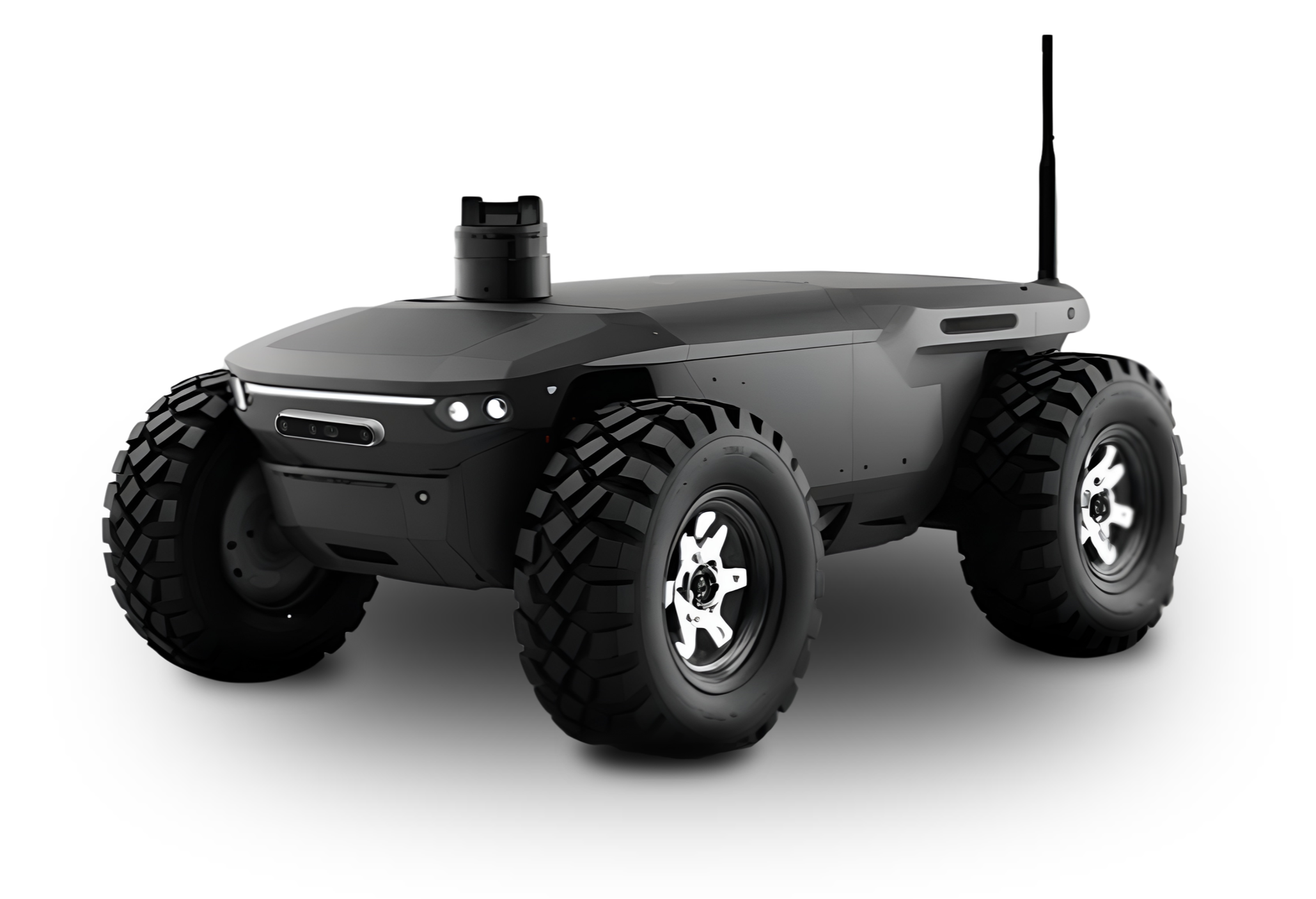
The Base Station
At the heart of Base Robotics is the Base Station: an intelligent mothership that powers, houses, and manages the fleet.
The Base Station serves as:
Charging Hub: Fully recharges and swaps depleted batteries autonomously.
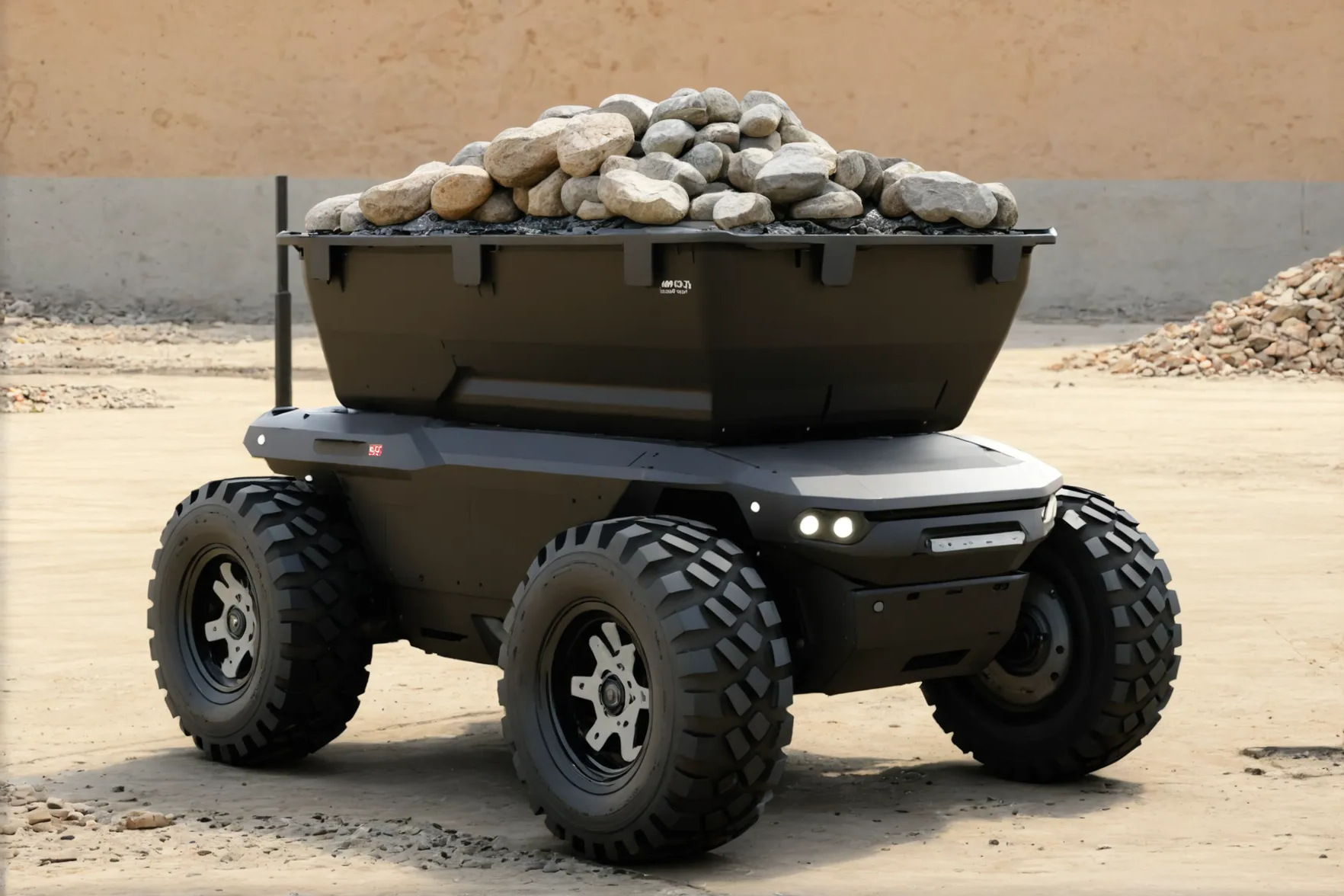
Tool Repository: Stores and deploys modular tools like hauling bins, mowers, or manipulators using a robotic arm or gantry system.
Fleet Coordination Node: Acts as the central brain for multi-robot operations, managing task assignment, diagnostics, and energy distribution.
Universal Docking System
Our proprietary docking system — now patent-filed — allows for tool self alignment, electrical/data handshake, and mechanical locking, creating a universal hardware interface.
This enables any tool or module — mower, manipulator arm, bin, sprayer, or inspection payload — to instantly connect and operate as part of the same intelligent system.

the tech
Base’s architecture integrates high-performance edge computing, advanced perception, and decentralized intelligence.Designed to sustain autonomous, modular operations in unstructured environments.

advanced sensing
A multi-sensor fusion stack combining 3D vision, LiDAR, RTK-level positioning, and near-field sensing enables full-field awareness and precision navigation in any terrain.

EDGE COMPUTE
Base robots process and act on data in real time through a hybrid compute system optimized for autonomy and adaptability. This edge-compute architecture supports complex planning, multi-robot coordination, and natural-language tasking, without relying on the cloud.
true autonomy
We’re developing true, human-out-of-the-loop AI: a decentralized autonomy layer that enables our robots to perceive, interpret, decide, coordinate, and adapt completely on their own.
Natural Language Interface
Operators communicate intent, not instructions.
Base’s onboard AI interprets voice or text commands like “inspect array three and haul the bin back,” translating them into actionable missions across the fleet.
Decentralized Multi-Agent Coordination
Each Base unit functions as part of a collective intelligence.
Robots communicate, share data, negotiate roles, and self-assign tasks, continuously optimizing for uptime, energy, and efficiency.
Adaptive Reconfiguration
Base robots don’t just think - they adapt physically.
Units can autonomously and swap tools using our patent-filed universal tool docking interface, reconfiguring itself to perform the next task without human contact or downtime.
applications
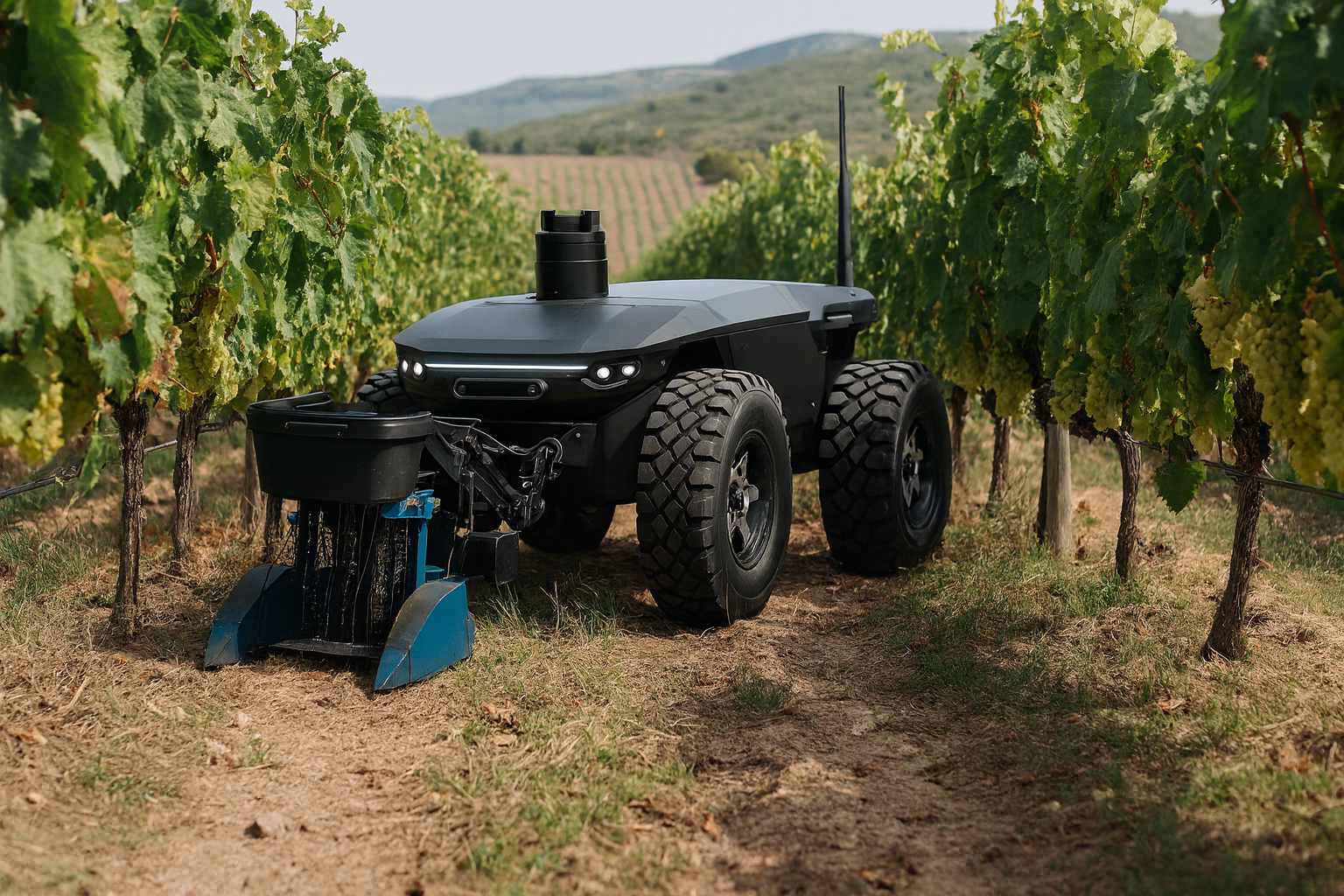
-
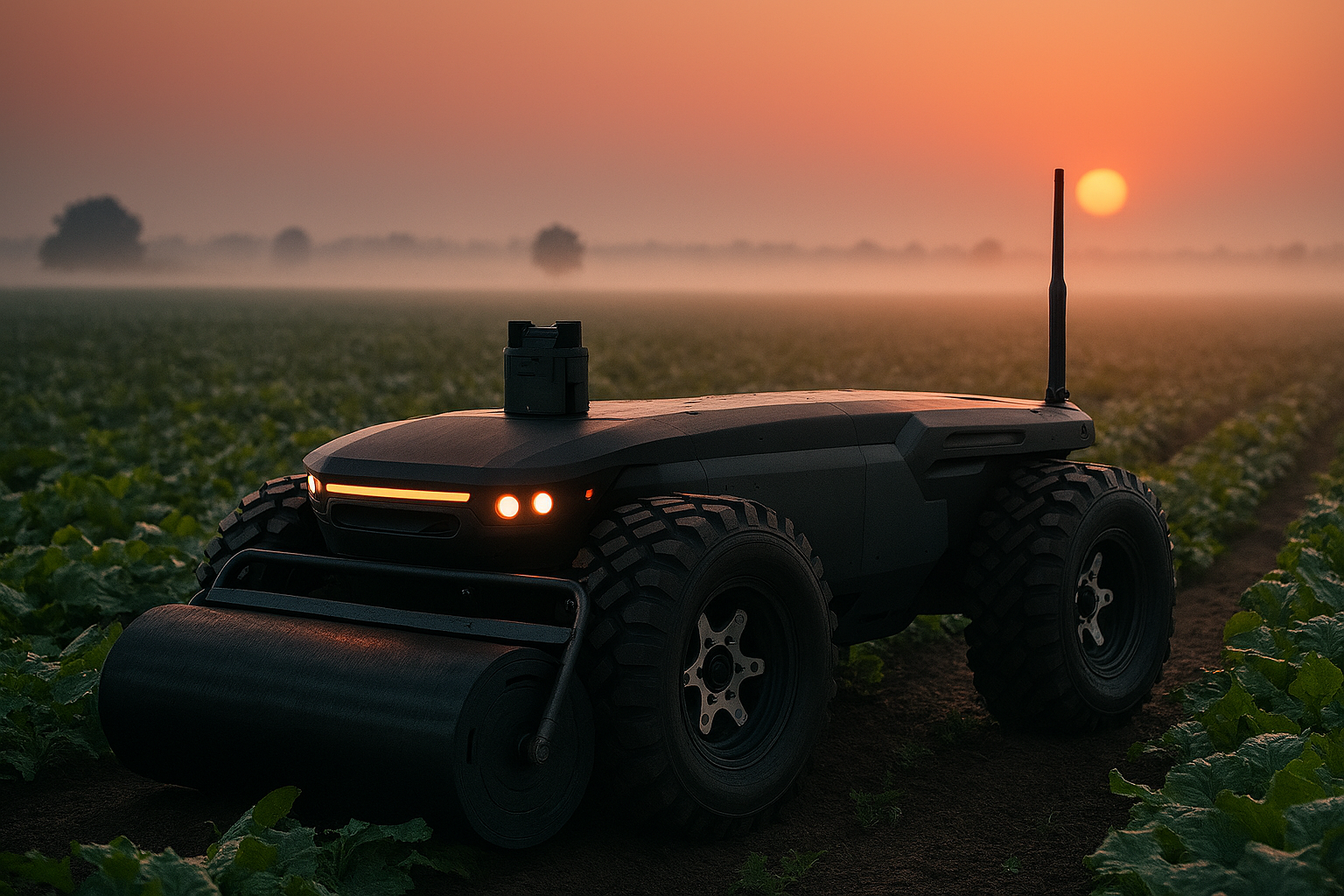
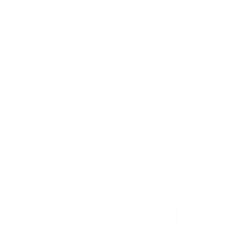
Base can haul, tow, seed, and patrol farmland fully autonomously.
With its modular design, base reconfigures itself in minutes: one day it’s hauling harvest bins, the next it’s rolling turf or spreading seed.
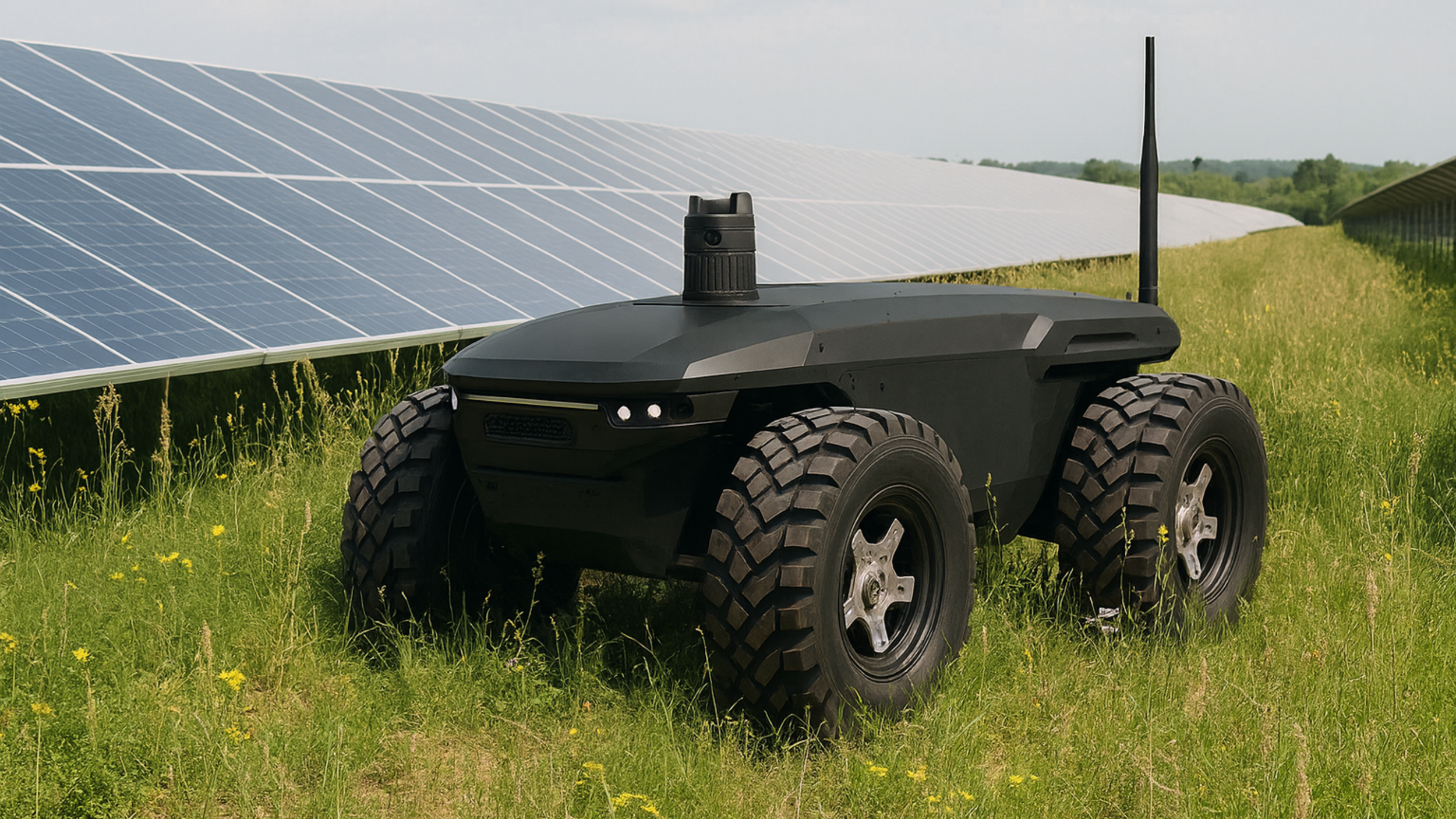
-
Equipped with interchangeable tools, Base can mow between rows, clear debris, transport equipment, and inspect panels - all without human supervision.
Operators can deploy a single robot or an entire fleet to handle repetitive, labor-intensive tasks with consistent precision.
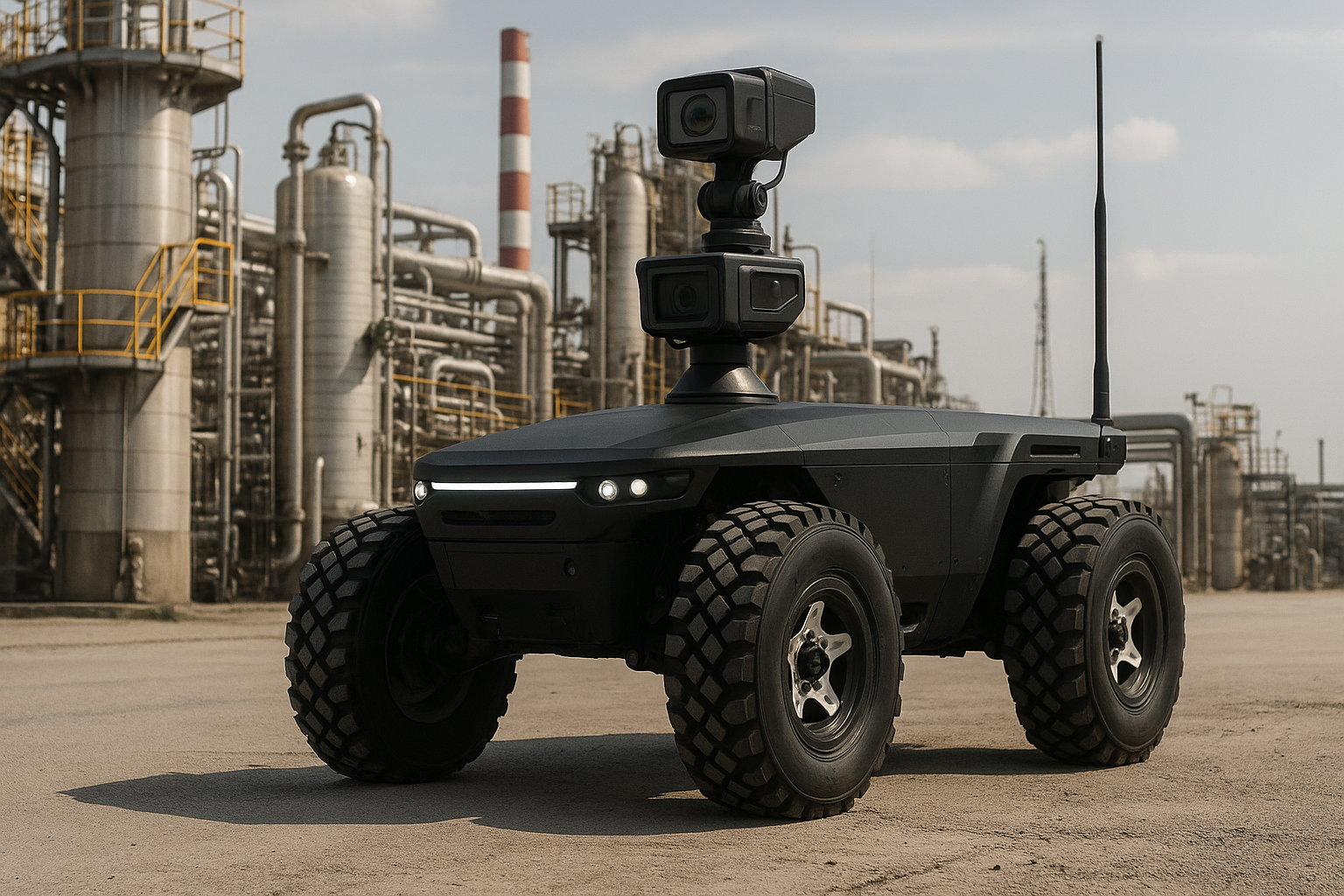
-
Industrial sites, power stations, and utility facilities demand constant inspection, transport, and upkeep, often in conditions hazardous for human crews.
Outfitted with specialized tools and sensors, Base can haul equipment, inspect infrastructure, deliver materials, and perform routine maintenance tasks entirely autonomously.
It navigates complex sites, communicates with other robots, and adapts its configuration depending on the job - whether that’s carrying parts across a substation or inspecting transmission equipment.
-
Base goes beyond basic plug-and-play modularity. Base autonomously docks and swap tools using its patent-filed universal interface - transforming itself in the field without human intervention.
One robot. Infinite capabilities. -
Weatherproof, self-charging, and built for rugged environments, Base runs day or night, rain or shine - keeping operations continuous while human crews rest.
-
Compared to traditional industrial equipment, Base runs entirely on high-performance lithium battery power — resulting in zero fuel costs, minimal maintenance, and zero emissions.
-
Base operates with self-directed intelligence - perceiving, planning, and coordinating with other units completely independently. No manual control, no pre-programmed routes, no operator required.
-
Base isn’t a single robot - it’s a platform. Add new modules, stations, or robots as your operations grow, creating a flexible and scalable autonomy layer for any outdoor industry.
WHY BASE
The team

Noor Mili
Co-Founder
University of Texas at Austin
BS Aerospace Engineering
MS Mechanical Engineering
Experienced engineer specializing in robotics and aerospace. Founding engineer at Aescape Robotics, leading development from design to mass production.

Shan Roy
Co-Founder
Elon University
BA Finance and Entrepreneurship
Repeat founder with hands-on experience launching an e-bike company out of his college garage. Led the design, manufacturing and operations.
Together, we’re a team of builders with hands-on experience doing 3D CAD design, prototyping in the machine shop, collaborating with JDMs and manufacturers, and managing production on the manufacturing floor. We bring turn-key robotic development experience to the table, along with relentlessness, resourcefulness and agility. Backed by a strong network of manufacturing partners and leading experts in AI and robotics, we’re positioned to execute quickly and at scale.

the case for base
We are in the middle of an AI boom. Advances in edge computing, perception, and robotics, paired with rapidly declining hardware costs have made intelligent automation not just attainable, but truly scalable.
Yet, most progress in Physical AI has stayed indoors.
Humanoids and warehouse robots dominate the spotlight while field industries — agriculture, renewable energy, and infrastructure — face a growing labor collapse and rising demand for output.
The next frontier of intelligence isn’t in warehouses or labs. It’s in the field.
So why aren’t we building another niche robot to automate one narrow task?
Because the world doesn’t need another one-off machine — it needs an ecosystem.
We believe in efficient design, both in what we build and how we build it.
Instead of reinventing the wheel for every use case, we’re creating a universal platform: a robot that can adapt, reconfigure, and evolve to handle multiple tasks autonomously.
That’s why we’re creating Base.
We’re starting with underserved industries like agriculture, landscaping, solar O&M, and industrial maintenance, where autonomy can immediately reduce costs, increase uptime, and fill the growing gap in skilled labor.
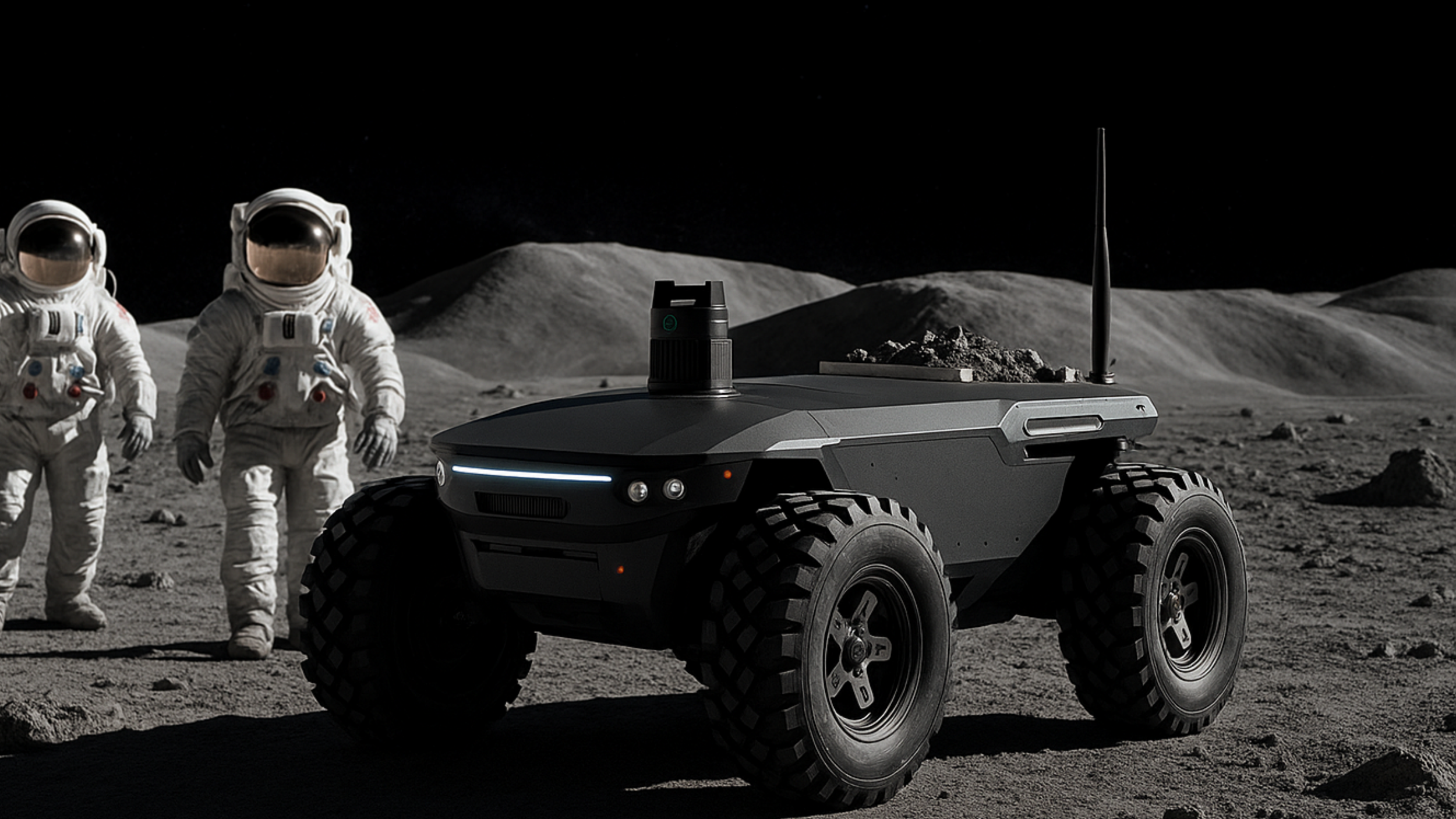
our vision extends far beyond Earth.
As humanity prepares to return to the Moon, we envision a future where the Base ecosystem enables self-sustaining operations on lunar and extraterrestrial missions.
In launch environments where mass is money,
a single robot capable of performing many tasks is not just efficient - it’s essential.